
How to Start Homeschooling: The First 30 Days, in Order
Some links in this post are affiliate links. If you buy through one, First Homeschool earns a small commission at no extra cost to you — it helps keep guides like this free and the used shelf stocked.
You've decided to homeschool, or you're close, and every guide you open starts with a curriculum list. So you're pricing boxed sets before you know whether your state wants a form from you. That's backwards, and it's the most expensive way to begin.
Here's how to start homeschooling in the right order. Week one is legal: read your state's law, file what it asks for, and withdraw your child in writing. Week two is rest and watching. Week three you choose a method and buy two subjects, math and reading. Week four you start a short day and add to it. You don't buy curriculum until week three, because you can't pick well until you've watched your kid learn at home.
I taught special education and ran a school before I opened a used curriculum store, and I homeschool my own kids. This is the order I'd give a friend.
In short
- Week 1: the legal steps. They differ by state, so verify with your state's department of education.
- Week 2: no lessons. Rest, read aloud, and watch how your child learns.
- Week 3: choose a method, take placement tests, and buy math and reading only.
- Week 4: start short and add one subject a week.
- The costly mistake is buying a full curriculum in week one.
| When | What you do | What you don't do yet |
|---|---|---|
| Week 1 | Read your state's law, file what it asks for, withdraw in writing | Shop |
| Week 2 | Rest, read aloud, get a library card, watch how your kid learns | Start lessons |
| Week 3 | Pick a method, take placement tests, buy math and reading | Buy a full grade-level box |
| Week 4 | Start a short day, add one subject a week, keep simple records | Run eight subjects on day one |

What do you need before you start homeschooling?
Less than you think. You need to know your state's rules, you need a library card, and you need about a month of patience. You don't need a schoolroom, a teaching degree, or a full set of books.
You're also not alone in this. The National Center for Education Statistics (NCES), the federal agency that tracks school data, reported that about 3.4 percent of K–12 students were homeschooled in the 2022–23 school year. That figure comes from its 2023 National Household Education Survey, released in September 2024. Call it one student in thirty. Odds are good that families in your town are doing this right now.
Can you really wait three weeks to buy anything? Yes. Nothing bad happens to a child who spends two weeks reading and resting. Plenty goes wrong when a parent spends several hundred dollars on a program chosen from a catalog photo.
Week 1: What are the legal steps to start homeschooling?
Homeschool law is state law. There's no federal form and no national rulebook, so what a family does in one state can be wrong a few miles over the line. As of October 2026, the steps below describe the general pattern only. Verify every one of them with your state's department of education before you act.
The Home School Legal Defense Association (HSLDA), a homeschool advocacy and legal membership organization, sorts state laws into four groups by what they ask of parents:
- No notice to anyone.
- A notice to the local school district.
- A notice plus test scores or a professional evaluation.
- All of that, with further requirements on top.
Which group you live in decides how much of this week is paperwork.
Do it in this order:
- Read the law itself. Start at your state department of education's homeschool page. Use HSLDA's state pages as a plain-language second read, knowing it's an advocacy group.
- File what your state asks for. A notice of intent is a short form or letter telling the state or district that you're homeschooling. Some states require one. Some don't. If yours does, it comes with a deadline, so find that date first.
- Withdraw in writing. If your child is enrolled in a school now, HSLDA recommends formally withdrawing, sending the letter by certified mail with a return receipt, and keeping copies of everything. A child who simply stops showing up can look truant.
- Start a folder. Put the notice, the withdrawal letter, and the mail receipt in it. HSLDA notes that some state laws require certain records to be kept, and you'll add to this folder all year.
Two questions come up every time. Can you start mid-year? HSLDA's answer is "Generally, yes," once you've met your state's setup requirements and formally withdrawn. Do you need to be a teacher? The same source says "no state requires that every homeschooling parent be a certified teacher," though some states set other qualifications, such as a high school diploma or its equivalent.
If your state runs an education savings account or scholarship program, read its rules before you spend anything. Programs differ on what they cover and when. Check with your state program directly.
We're building a state-by-state series so you don't have to decode this alone. So far: Texas, New York City, and Arkansas. Each one is dated, and each still tells you to verify.
Week 2: Why shouldn't you start lessons right away?
Because your child just left one way of learning and hasn't arrived at the next. Deschooling is the adjustment period after a child leaves a classroom, when formal lessons pause so both of you can reset your idea of what learning looks like. BJU Press describes it as a stretch with little or no formal learning. Pam Barnhill adds that it's for parents as much as kids.
How long? A common rule of thumb in the homeschool community is about one month for every year the child spent in school. Both of those writers call it a rough guideline, not a rule, and so do I. A full month per year is more than most families can stomach. One real week, with no workbooks, is the least I'd accept.
That week isn't empty. Do these:
- Get a library card for every reader in the house and go twice.
- Read aloud daily. Any good book.
- Keep ordinary routines: wake-up time, chores, bedtime. BJU Press makes the same point; only the formal lessons stop.
- Watch your kid. When does she focus best? Does he build things, talk things through, or disappear into a book?
Write down what you see. That page of notes is worth more than any curriculum review, because next week it tells you what to buy. Skip this, and you'll be guessing.
If your child was never in school, you can shorten this week. Don't skip the watching.
Week 3: How do you choose a homeschool curriculum?
Pick the method before the books. A homeschool method is the overall approach to teaching, such as traditional textbooks, Charlotte Mason, or classical. A curriculum is the specific set of books you buy to carry it out. Families who shop for curriculum first usually end up with a method they didn't choose.
Start with the seven main homeschool methods, explained in plain English and hold your week-two notes next to it. If one catches your eye, go deeper: we have beginner guides to Charlotte Mason and classical education.
Then buy two subjects. Math and reading. That's the whole first order.
Why so little? Those two are the skills everything else leans on, and they're the ones where level matters most. So take the publisher's placement test before you order. Most major math programs post one free. Give it cold and believe the result, even when it lands a grade below the number you expected.
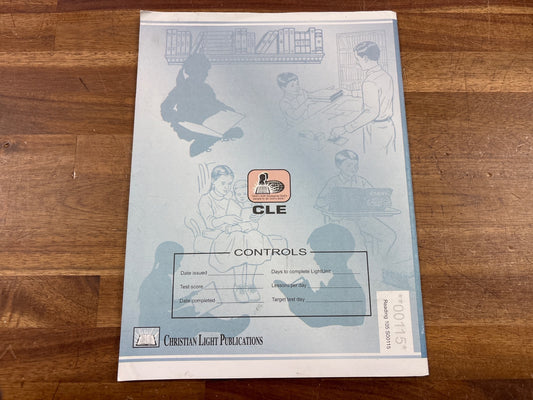
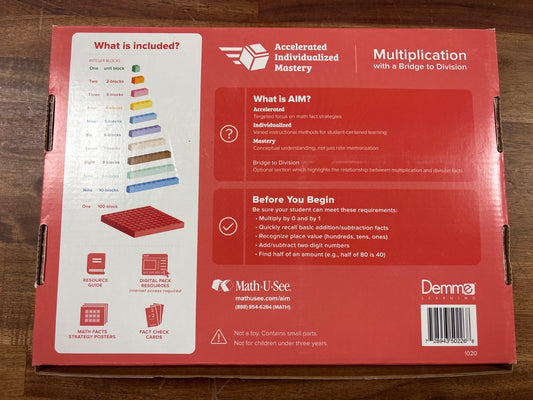
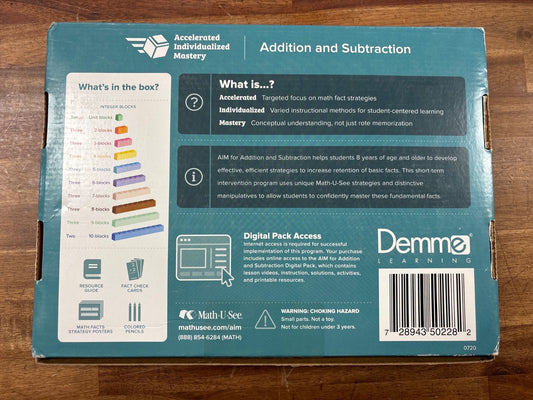
A box curriculum is a complete grade-level package from one publisher, every subject included. It's tempting because it ends the deciding. I'd skip it in month one. If the math in the box doesn't fit your kid, you've paid for all of it anyway.
Buy used where you can. Textbooks turn over fastest in my store, which is good news if you need one. Browse used math curriculum, early reading, and language arts by level, or look through the $10-or-less shelf for single workbooks. For a tighter budget, see our list of free and low-cost curriculum for every subject.
One warning about used sets. When I buy back curriculum, close to half of a typical box is answer keys and test keys. Programs have more pieces than the cover suggests. Before you pay for a used textbook, confirm the matching key comes with it or can be found.
Week 4: What should your first week of homeschool look like?
Short. Day one is math, reading, and a read-aloud. Then you stop while it's still going well.
How short is short? Your state may set required hours or days, so check that first. Past the legal minimum, I'd begin with about an hour of focused work for a young child and somewhat more for an older one. That's my judgment, not a statistic. Working one-on-one covers ground a classroom needs half a day for.
Add one subject a week after that. Writing or handwriting in the second week, then history or science. By the end of the second month you'll have a full load that grew a piece at a time. Nobody got buried.
Keep records from the first day, and keep them plain. A dated list of what you did is enough for most families, in a notebook or an online planner. Homeschool Planet is a digital planner that reschedules missed days for you, and we compared paper options in our planner reviews. If your state requires specific records, that requirement decides the format.
Expect a wobble around week six. Plenty of families hit one, and it rarely means you chose wrong. Fix one thing at a time.
Who does this 30-day plan fit?
Who it fits: parents pulling a child out of school, parents starting with a kindergartner, and anyone who feels pressure to order a full curriculum this weekend. It also fits a mid-year start, since nothing here depends on August.
Who it doesn't: families in states with tight filing deadlines or approval steps, where week one may take longer and has to be finished before anything else. It's also a poor fit for a high schooler who needs specific credits this semester. In that case, settle the course plan first and shorten the rest.
And if you already bought the big box? Don't panic and don't return it yet. Start with its math and reading only, and bring in the rest a subject at a time.
Frequently asked questions
How long does it take to start homeschooling?
The paperwork can take a day or a few weeks, depending on your state. Getting settled takes longer. Plan on about 30 days: one week for the legal steps, one to rest and observe, one to choose and buy, and one to begin a short daily routine.
Can I start homeschooling in the middle of the school year?
Generally, yes. HSLDA, a homeschool advocacy and legal organization, says a mid-year start is generally allowed once you've met your state's setup requirements and formally withdrawn your child from the previous school. Verify the exact steps with your state's department of education before the last day.
Do I need a teaching degree to homeschool?
No state requires every homeschooling parent to be a certified teacher, according to HSLDA. Some states do set other qualifications, such as a high school diploma or its equivalent. Your state's department of education lists what applies to you, so check there as of the month you start.
What curriculum should I buy first?
Math and reading, and nothing else for the first month. Take the publisher's placement test before ordering, since the grade on the cover often isn't the level your child needs. Add history, science, and the rest one at a time after the daily routine is holding.
How many hours a day should a new homeschooler do?
Fewer than you expect. Your state may set required hours or days, so check that first. Beyond the legal minimum, I'd begin with about an hour of focused work for a young child and build from there. One-on-one teaching covers ground faster than a classroom does.
The short version
Handle the law first, rest second, buy third, and teach fourth. Start with math and reading at the level the placement test gives you, and add one subject a week.
Browse used curriculum by level →
Sources
- Institute of Education Sciences / NCES, “Higher Percentage of K–12 Students Are Receiving Academic Instruction at Home” (3.4 percent homeschooled in 2022–23, 2023 NHES, released September 2024; checked October 2026)
- HSLDA, “Homeschool Laws by State” (four categories of state regulation; advocacy organization; checked October 2026)
- HSLDA, “Legal FAQs” (formal withdrawal, certified mail, mid-year start, teacher qualifications, record keeping; checked October 2026)
- BJU Press Homeschool Blog, “Deschooling” (definition, one-month-per-year guideline, keeping routines; checked October 2026)
- Pam Barnhill, Homeschool Better Together, “Demystifying Deschooling” (deschooling for parents, library and read-alouds, rule of thumb as guideline; checked October 2026)